Best Deal on Smart Meters – Save Energy & Money Today!

-
Contact
-
Email
Best Deal on Smart Meters – Save Energy & Money Today!
20 Nov 2026 IPDS
Somewhere in your neighbourhood, an overhead tank is overflowing right now. Nobody has noticed. The motor was switched on, the phone rang, the day carried on, and water was quietly running down the terrace wall.
It is a small moment, but it happens in homes and buildings every day. The problem is not always carelessness. Most people simply don't know how much water they use or when it is being wasted. This is where smart water meters can make a difference.
They track water consumption in real time, helping people spot unusual usage, identify possible leaks, and take action before thousands of litres go to waste.
A traditional water meter tells you how much water you have used. Someone has to visit the property, check the meter, write down the reading, and use it to prepare your bill.
The problem? You only know what the meter says when someone checks it. If a reading is missed, the bill may be based on an estimate. And if a pipe develops a small leak, water can keep flowing for days or even weeks before anyone notices. You might only realise something is wrong when your water bill suddenly goes up. Even then, finding out when the leak started or which pipe caused it can be difficult. For housing societies and factories, where water consumption is much higher, this can mean thousands of litres wasted before anyone catches the problem.
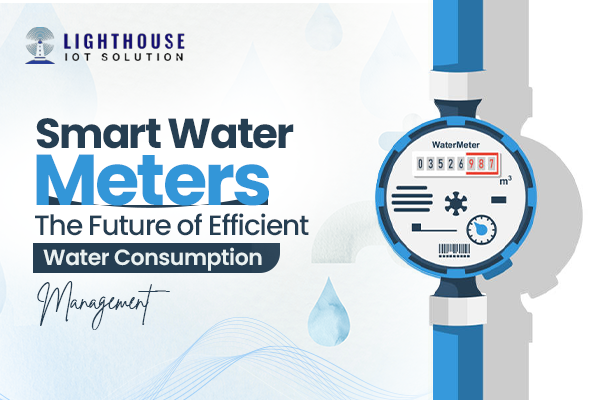
A smart water meter still measures water, but it does far more with the measurement. It records flow and volume continuously and sends the data wirelessly to a mobile device or a water management platform. Nobody has to stand beside it with a notebook.
Because readings arrive regularly, patterns show up. You can see how consumption moves through the day, spot an unusual jump, and act while there is still water left to save. The meter stops being a counting device and becomes a source of information.
Leaks are the clearest example. Picture a pipe fault in a basement nobody visits. With a smart water meter, water that keeps flowing through the night, when no one should be using any, stands out at once. A manager can send someone to check the same day.
The same logic applies to overflowing tanks and faulty valves. Water that would have vanished unnoticed shows up as a line on a screen.
In shared buildings, water bills are often divided based on flat size or a fixed formula rather than actual usage. This means residents who use less water may end up paying the same as those who use more, leading to complaints and disagreements. Installing separate water meters for each unit makes billing fairer because everyone pays for the water they actually use.
The benefits extend to commercial properties as well. Hotels, offices and factories can track how much water each floor, section or process uses. This helps them identify areas with unusually high consumption, find ways to reduce waste and manage water costs more effectively. When everyone has access to accurate readings, there is also less room for billing disputes.
Water and electricity are managed with similar thinking, so the terms are worth untangling. A digital energy meter replaces the old mechanical dial with an electronic reading for electricity. A smart energy meter goes a step further and sends that reading on its own.
A smart water meter follows the same path for water. It measures digitally and communicates wirelessly. Many buildings now track both, and a connected setup lets a manager watch electricity and water side by side. That matters because water pumps run on electricity, so the two bills are more closely linked than they look.
Start with accuracy, because everything else depends on it. A meter that drifts makes billing unreliable. Then check how the data travels. It should reach your phone or dashboard wirelessly, without a site visit.
Also think about where it will be used. A home, a society, and a factory have different needs. And keep it simple. If your team cannot read the data without a technician beside them, much of the value is lost.
Lighthouse IoT Solutions, established in 2021 and based in Noida, builds IoT-enabled meters for residential, commercial, and industrial use. Its Water Meter is built for modern water management in both homes and commercial settings.
Integrated wireless communication sends usage data to a mobile device or water management platform, giving instant visibility into flow and volume along with consumption trends. That fits the company’s wider mission of helping users track consumption and reach their sustainability goals.
Conservation usually fails for a simple reason: people cannot improve what they cannot see. Asking a building’s residents to use less water works far better when they can see how much they use today. A smart water meter gives that starting point. Managers can set a realistic target, check progress week by week, and share the numbers with residents or staff. Small changes, like fixing a dripping tap or adjusting how a tank is filled, start to show up in the data. Over time, those small wins add up to meaningful savings, making water management a genuine part of any sustainability plan.
Want clearer visibility into your water use? Talk to Lighthouse IoT to see how its Water Meter can fit your home, society, or business.
It is a water meter that measures usage digitally and sends readings wirelessly, so nobody has to read it by hand.
A regular meter only counts and needs manual reading. A smart one reports regularly and shows usage patterns.
Yes. A smart water meter tracks water flow and can flag unusual usage, such as water running when all taps are off. This helps detect possible leaks early and prevent water wastage.
No. One measures electricity and the other measures water. However, both send their readings automatically.
Smart water meters can be used in homes, apartments, housing societies, offices, hotels, and factories to monitor water consumption, track usage, and manage water costs more effectively.