Best Deal on Smart Meters – Save Energy & Money Today!

-
Contact
-
Email
Best Deal on Smart Meters – Save Energy & Money Today!

24 Jun 2026 IPDS
Choosing the right electricity meter may not be the most exciting decision, but it is one of the wisest decisions you can make.
However, the choice of your meter depends on where you want it to be installed (new home, commercial property) or simply want to get better control of your electricity bills.
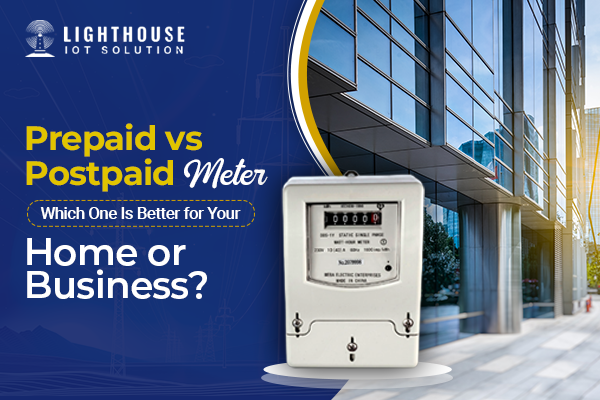
However, with the emergence of new technologies such as keypad and Bluetooth Meters, the debate of prepaid vs postpaid meters has been gaining more momentum. In this blog, we will guide you on which one is actually better for you.
Before directly diving into the comparison, first try to understand the basics.
A postpaid meter is the traditional model. You consume electricity throughout the month and receive a bill at the end of the billing cycle. It is a system most households have lived with for decades.
A prepaid meter works like a mobile recharge. You load credits in advance, and the meter deducts usage as you go. Once the balance runs out, the supply stops until you top it up again. A keypad meter is one of the most common types of prepaid systems — you simply enter a recharge token via a numeric keypad, and your balance gets updated instantly.
The biggest advantage of a prepaid meter is visibility. You always know how much and at what rate you have consumed the electricity. This alone changes the consumption behaviour of an individual because now they can see the impact in real time.
This is especially useful for landlords managing rental properties, housing societies, or small business owners like PGs who need to track energy spend across multiple units.
With a postpaid system, the end-of-month bill can sometimes be a shock. A prepaid meter eliminates that problem. You load only that amount of budget that you can consume. Thus, budget management becomes very easy instead of giving a last-minute shock.
Today's prepaid meters are much more convenient and user-friendly than the outdated models that were used in the past. For example, Bluetooth meters enable users to recharge remotely, monitor usage on a smartphone app, and receive low-balance alerts before power is cut off. Such a level of connectivity is what makes smart prepaid metering a real possibility for residential and commercial applications.
For commercial setups with multiple tenants or departments, a prepaid single phase energy meter can significantly reduce the administrative overhead of billing, collections, and disconnection notices. Each unit manages its own consumption, and the revenue flow is consistent.
For users who prefer not to think about recharging frequently, postpaid meters offer convenience. You use electricity as needed and settle the bill at the end of the month. This can be easier for households with predictable usage patterns and a reliable payment history.
If you forget to recharge a prepaid meter, your supply gets cut off — which can be problematic in households with elderly residents, medical equipment, or in commercial setups where an interruption could mean real financial loss. Postpaid systems avoid this risk, as long as bills are paid on time.
Businesses or facilities with high electricity demand may find postpaid meters more flexible, especially when consumption varies significantly month to month. Paying after usage allows better cash flow management in some scenarios.
|
Feature |
Prepaid Meter |
Postpaid Meter |
|
Billing Model |
Pay before use |
Pay after use |
|
Budget Control |
High |
Moderate |
|
Risk of Surprise Bills |
None |
Possible |
|
Supply Interruption Risk |
If balance runs out |
If bill is unpaid |
|
Smart Features |
Bluetooth, app-based |
Limited in older models |
|
Best For |
Rentals, SMEs, budget-conscious users |
Stable households, high-volume users |
There is no single answer that fits every situation. However, here is a simple way to think about it.
If you want better control, transparency, and lower bills, a prepaid meter — particularly a modern single phase meter with Bluetooth or Keypad functionality — is likely the smarter choice. It encourages mindful consumption, removes billing disputes, and works well for both residential and small commercial applications.
If you value convenience and uninterrupted supply without worrying about balance, a postpaid meter may suit you better, especially in stable home environments.
For businesses managing multiple units or tenants, prepaid metering almost always makes more operational sense.
Regardless of which type you choose, the quality of the meter itself is non-negotiable. A poorly manufactured meter leads to inaccurate readings, billing errors, and potential compliance issues. This is why working with a trusted Meter Supplier in Noida matters — manufacturers in this region have built a strong reputation for producing meters that meet both domestic standards and international specifications.
Whether you need a single phase energy meter for a small residential unit or a more advanced Bluetooth Meter for a commercial setup, sourcing from a reliable manufacturer ensures accuracy, durability, and long-term performance. Companies such as Lighthouse IoT are working to integrate smart metering capabilities into both prepaid and postpaid systems, making energy management more intelligent and efficient.
A prepaid meter where you enter a numeric token to load electricity credit. Simple, secure, and instant.
Yes. Contact your electricity provider or a licensed meter supplier to replace your existing unit with a single phase meter.
Same accuracy as any standard meter — but with added wireless monitoring and app connectivity for smarter energy tracking.
Yes. They simplify billing, eliminate collection hassles, and give clear visibility into energy costs across multiple units.
A trusted Meter Supplier in Noida ensures accuracy, regulatory compliance, and long-term reliability — poorly made meters cause billing errors and compliance issues.
The energy landscape is changing. Smart metering is no longer a luxury — it is becoming the standard. Whether you go with a keypad meter for its simplicity or a Bluetooth Meter for its connectivity, making an informed choice today will save you money, reduce disputes, and give you real control over how you use energy.
The right meter is not just a utility device; it is a tool that helps you manage your home or business better.