Best Deal on Smart Meters – Save Energy & Money Today!

-
Contact
-
Email
Best Deal on Smart Meters – Save Energy & Money Today!

16 Oct 2026 IPDS
For decades, the management of electricity in India was a routine affair. A meter reader would come once a month, write down a number, and disappear. Weeks later, the bill would come. But by the time anyone noticed something was off, whether it was a high reading, a faulty meter, or a billing error, the damage was already done.
No one had any real visibility. There was no real control. And nobody expected anything else because that's just how electricity worked.
That assumption is being torn down as we speak.
IoT energy monitoring is fundamentally changing how homes, businesses, and industries across India interact with their electricity consumption. Not incrementally. Not gradually. The shift is happening fast, and the gap between properties that have made the switch and those that have not is growing wider every month.
IoT stands for Internet of Things, the network of connected devices that communicate data in real time without requiring human intervention.
Applied to energy, IoT energy monitoring means your meter is no longer a passive recorder waiting to be read. It becomes an active, communicating device that continuously tracks consumption, transmits data, flags anomalies, and gives you live visibility into exactly how electricity flows through your property.
The difference between a traditional meter and an IoT energy monitoring setup is the difference between checking your bank balance once a month and having a banking app on your phone. Same underlying information. Completely different level of control.
India's energy sector has long struggled with three interconnected problems: high aggregate technical and commercial losses, widespread energy theft, and billing inaccuracies that cost utilities and consumers billions of rupees annually.
Manual meter reading creates gaps. A reading taken once a month leaves weeks of consumption unverified. Tampered meters go undetected for billing cycles at a time. Estimated readings substitute for actual ones more often than anyone is comfortable admitting.
IoT energy monitoring addresses all three problems simultaneously. Real-time data transmission means consumption is verified continuously, not monthly. Tamper detection built into smart meters flags interference the moment it occurs. Automated readings eliminate estimation.
For a country running a national smart grid initiative and pushing aggressively toward renewable energy integration, this kind of infrastructure is not optional. It is foundational.
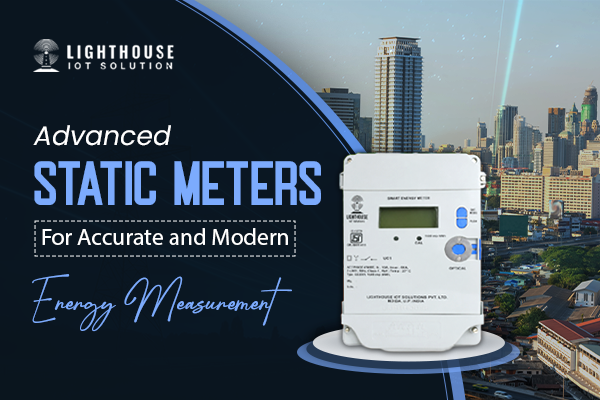
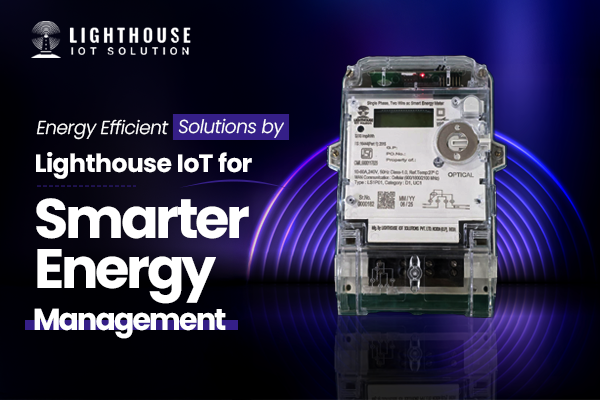
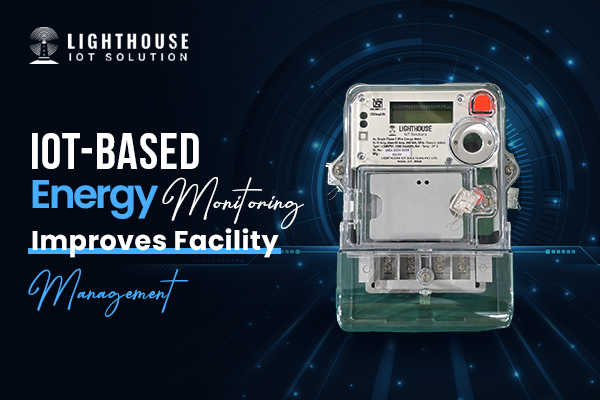
The smart energy meter is the hardware at the heart of any IoT energy monitoring setup. It measures consumption with high accuracy, communicates data in real time, and integrates with energy management platforms that give operators visibility across entire building portfolios from a single dashboard.
For commercial properties, industrial facilities, and large residential complexes, a smart energy meter transforms energy management from a monthly accounting exercise into a continuous operational function. Consumption spikes are caught in real time. Equipment inefficiencies are flagged before they become expensive problems. Peak demand periods are identified and managed proactively.
This is what genuine energy control looks like, and it starts with the right smart energy meter.
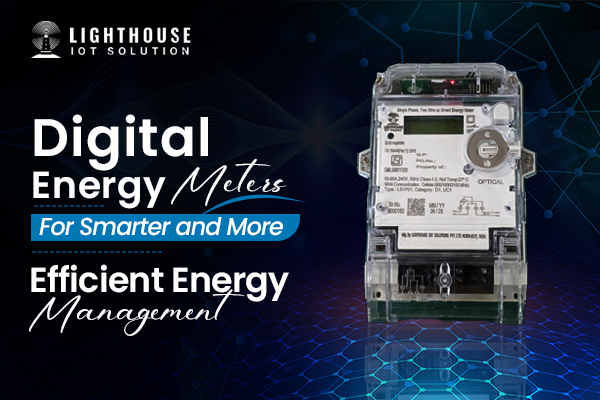
The digital energy meter forms the accurate, tamper-resistant foundation that IoT energy monitoring depends on. Unlike older analog meters with mechanical dials that can be misread or manipulated, a digital energy meter records consumption with precision and displays it on a clear digital interface that both the property owner and the utility provider can trust.
In multi-tenant buildings, individual digital energy meters at each unit level create accountability that shared metering simply cannot achieve. Every tenant sees their own consumption. Every unit generates its own accurate reading. Billing disputes stop happening because the data is transparent, consistent, and available to everyone involved.
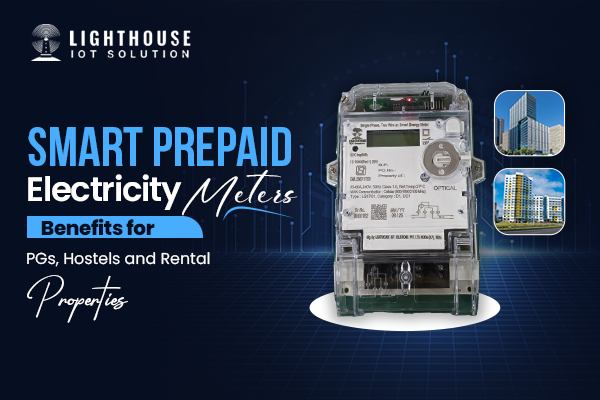
The keypad meter brings IoT energy monitoring principles into the prepayment space, making it particularly relevant for PGs, hostels, rental properties, and housing societies where post-payment billing creates persistent collection challenges.
Users load credit in advance by entering a voucher code into the keypad. The meter deducts consumption in real time as electricity flows. When credit runs low, the tenant tops up. The landlord receives no bills, chases no payments, and mediates no disputes.
What makes the keypad meter especially powerful in an IoT context is the real-time deduction mechanism. Consumption is not estimated or calculated after the fact. It is tracked live, unit by unit, giving tenants immediate visibility into what their electricity habits actually cost them. That visibility alone can help properties consistently reduce overall energy consumption.
For homeowners, it means knowing exactly where electricity goes every day rather than once a month. The AC running all night, the geyser left on, the standby power quietly draining units in the background. All of it becomes visible and manageable.
For commercial building managers, it means identifying which floors, units, or systems are driving up costs and having the data to act on it before the bill arrives. Load balancing, peak demand management, and equipment efficiency all improve when you can see consumption in real time
For industries, the stakes are even higher. Electricity is one of the highest operating costs in manufacturing, logistics, and processing facilities. IoT energy monitoring gives plant managers granular visibility into consumption across every phase of their electrical system, making targeted efficiency improvements possible for the first time.
For utilities and grid operators, widespread IoT energy monitoring adoption reduces losses, improves billing accuracy, and provides the consumption data needed to manage supply and demand more effectively across the entire grid.
The era of monthly meter readings, estimated bills, and reactive energy management is ending. IoT energy monitoring is replacing it with something better: continuous data, real-time control, and a level of transparency that benefits everyone from the individual tenant to the national grid operator.
India's energy future depends on infrastructure that is smart, connected, and accountable. Smart energy meters, digital energy meters, and keypad meters are the building blocks of that infrastructure, and they are available right now.
Lighthouse IoT delivers all of it. As a trusted meter supplier in Noida, their complete range of IoT-ready smart meters is built for Indian conditions, certified to BIS standards, and designed to bring genuine energy intelligence to homes, businesses, and industries across the country.
Ready to move beyond the monthly guessing game? Explore Lighthouse IoT's energy monitoring solutions today and take real control of your electricity for the first time.
It is a system where connected smart meters track and transmit electricity consumption data in real time, giving users and utility providers continuous visibility without manual meter reading.
A smart energy meter measures consumption accurately and communicates data automatically to energy management platforms, enabling remote monitoring, real time alerts, and automated billing.
A digital energy meter offers higher accuracy, tamper resistance, and clear digital readings that eliminate the misreading and manipulation risks associated with older mechanical meters.
A keypad meter tracks consumption in real time and deducts from prepaid credit as electricity is used, giving tenants immediate visibility into their usage and eliminating post-payment billing challenges.
Absolutely. From a single residential flat with a smart energy meter to a large housing society with individual digital energy meters at every unit, IoT energy monitoring scales to any property size.